
Holbox is a car-free island off the northern tip of the Yucatan Peninsula, reached by a short ferry from Chiquila (about 2 hours from Cancun), known for sandy unpaved streets, bioluminescent plankton at night, and, from roughly June through September, whale shark tours a short boat ride offshore.
TL;DR
- Getting there: ~2-hour drive from Cancun to Chiquila, then a 20-25 minute ferry — plan on 2.5-3 hours door to door.
- No cars on the island — golf carts, bikes and walking cover everything.
- Whale sharks gather offshore roughly June through September, peaking in July-August.
- Bioluminescence in the water is visible on calm, dark nights, best away from town lights.
- Streets are unpaved sand — pack accordingly, and expect a slower pace than mainland beach towns.
What makes Holbox different
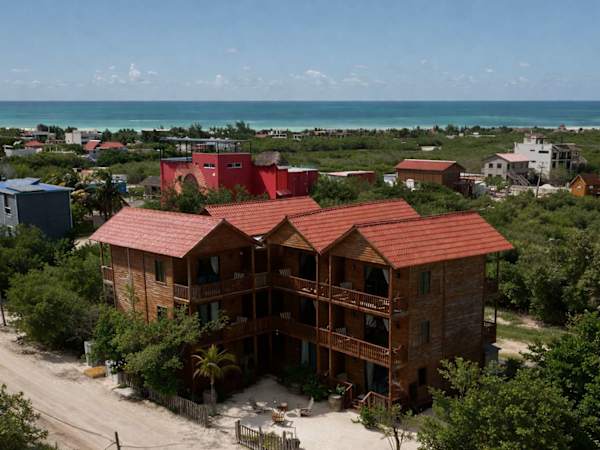
Holbox sits at the western edge of the Yucatan’s Caribbean coast, technically on the Gulf of Mexico side, separated from the mainland by the Yalahau lagoon. The whole island has stayed intentionally low-key: no paved roads, no large resorts, and a skyline capped by a handful of low-rise buildings. That’s the main draw for travelers who find Cancun’s Hotel Zone or Playa del Carmen’s Fifth Avenue too built-up.
Getting there, realistically
There’s no bridge to Holbox. The route is: drive or shuttle from Cancun (or Playa del Carmen, Tulum, etc.) to the small town of Chiquila, park or get dropped off, then take a passenger ferry across the lagoon — the crossing itself takes 20-25 minutes. Door to door from Cancun, budget 2.5 to 3 hours each way. It’s a genuine commitment, which is part of why the island has stayed quieter than easier-to-reach spots.
Whale sharks: the headline wildlife encounter
From roughly June through September, whale sharks — the largest fish in the ocean, filter feeders that pose no danger to swimmers — gather in large numbers in the plankton-rich waters north of Holbox. Regulated tour operators run half-day trips with strict limits on how many swimmers can be in the water with a shark at once, both for shark welfare and safety. July and August are peak months for sightings.
What a day on Holbox actually looks like
Mornings tend toward the beach or a boat tour (whale sharks in season, or a trip to nearby Isla Pájaros for birdwatching). Afternoons are slow by design — golf-cart rides down the island’s few sand roads, hammock time, and long lunches. After dark, calm nights away from town lights sometimes bring visible bioluminescent plankton in the shallows, though it’s weather- and moon-dependent rather than guaranteed.
Holbox vs. a faster island trip
If time is tight, Isla Mujeres is a 15-20 minute ferry from Cancun itself and works as a day trip — see our Holbox vs. Isla Mujeres comparison for which one actually fits your trip.
| Factor | Holbox | Isla Mujeres |
|---|---|---|
| Travel time from Cancun | ~2.5-3 hrs | ~30-45 min |
| Cars allowed | No | Golf carts standard, few cars |
| Vibe | Slow, unpaved, low-key | Beach-town, more developed |
| Best for | A dedicated multi-day stay | Day trips or shorter stays |
Frequently asked questions
How do you get to Holbox from Cancun?
Drive or take a shuttle about 2 hours from Cancun to the town of Chiquila, then a 20-25 minute passenger ferry to Holbox island. Cars aren't allowed on the island itself.
When is whale shark season near Holbox?
Roughly June through September, peaking in July and August, when whale sharks gather to feed in the plankton-rich waters north of the island. Tours are regulated with limits on swimmer numbers per shark.
Are there cars on Holbox?
No. The island's streets are sand, not pavement, and getting around is by foot, bike, or golf cart — no rental cars operate on the island itself.
Is Holbox worth the extra travel time from Cancun?
For travelers who want a quieter, slower island atmosphere and don't mind the roughly 3-hour combined drive-and-ferry trip, most say yes. For a shorter trip with limited time, Isla Mujeres offers a faster island alternative.